Posted on Leave a comment

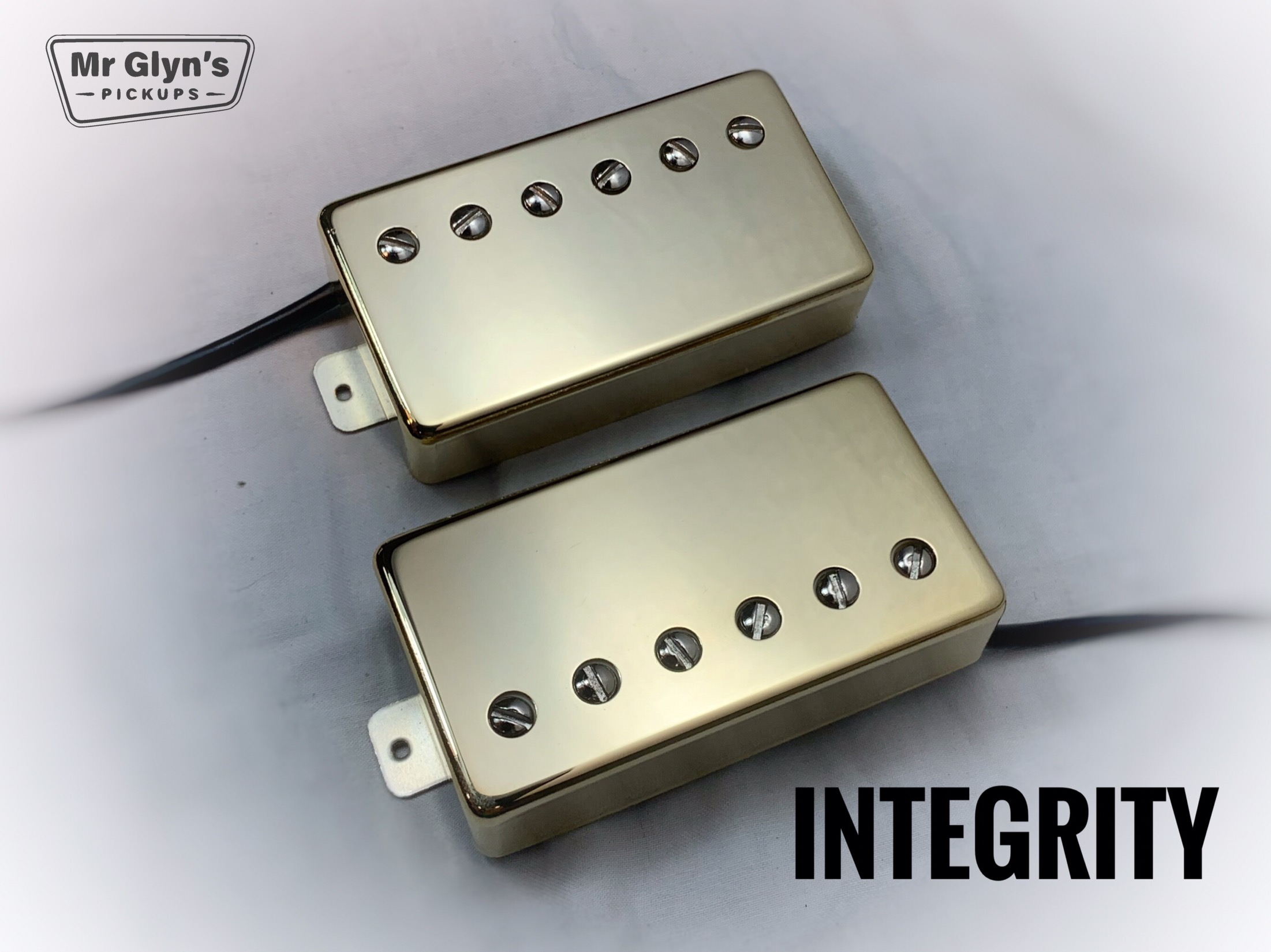
Playmaker humbucker set

Playmaker humbucker set NZ$399 for NZ customers, if you’re overseas they’re GST free; NZ$346.96

Playmaker humbucker Single NZ$219 for NZ customers, if you’re overseas it’s GST free; NZ$190.43

Cover NZ$20 ($17.39) extra each pickup

Bridge 11.9 KOhms Alnico IV – Neck 7.1 KOhms, Alnico II

The Playmaker humbucker set is a clear sounding guitar pickup set made for genres from classic rock to heavy blues.

Designed for its dynamics, this humbucker set reacts to your playing style and volume settings. They clean up when you back off. They give you the grit you’re looking for when you dig in. The perfect pickup for classic rock or dirty blues. Whether you’re pushing an amp, using pedals or using amp modeling.

Playmaker  humbucker set electric guitar pickup

The Playmaker was designed for players who need a guitar pickup with a little more than a PAF. But without being an over the top rock pickup set. They have a little more power and bite than a traditional PAF. The Playmaker’s dynamics and touch sensitivity help you stand out from the mix.

These pickups were designed around Gibson scale lengths. But they are also a good match for the Kokako Strat neck and middle pickups as a HSS set.

A big part of the testing process involved playing through various classic overdrive pedals as well as amplifiers. Both neck and bridge pickups had to work well with a Tube Screamer, Klon, Blues Driver and fuzz. Not to forget amp modelling, it’s a big part of modern playing.

Here Warren Mendonsa shows the dynamics of the pickups change when he uses the volume controls. The Playmakers respond to his pick attack, that creates huge possibilities for varying your tone and feel. Back off and the Playmaker backs off with you. Dig in and they sing.

Playmaker bridge pickup

The Playmaker bridge pickup was designed with pedals in mind. A part of the testing process was about voicing these pickups to be used with various overdrives. Tube Screamer, Klon and Blues Driver as well as natural amp overdrive were all used as test sounds.

Overdrive stacking is a big part of a lot of player’s sound. The Playmaker set was tested with this in mind.

The bridge pickup is wound asymmetrically and powered by an alnico IV magnet. This gives it better tonal balance than the slightly scooped alnico V magnet. But there’s more power than the alnico II in a PAF. The alnico IV delivers just the right amount of power. It is designed to respond well to variations in pick attack giving the dynamics that blues players need. It maintains its transparency and clarity when using the guitar volume giving you great onboard control.

Playmaker neck pickup

The neck pickup is also wound asymmetrically and uses an alnico 2 magnet to maintain a mid range balance.

The reason for the asymmetry is to give greater mid range clarity and that neck pickup chime. It loves clean funky rhythm lines as well as singing leads. This is a neck pickup that wants to be played, not just an ornament. It’s great for rhythm parts that stand out in a mix. But it’s not shy if you’re having a Gary Moore or Santana moment.

Here’s another example of the bridge and neck pickups.

Here is a short video showing some of my thoughts on the Playmaker and how they sound.

The Development of the Playmaker humbucker set

The idea behind this pickup came originally from Ben Sargent. He’s a well respected guitar repairer in Wellington NZ. He has fitted many sets of my pickups as well as using them himself.

He called me in late 2024 with an idea. He’d been thinking I should make a pickup between my Integrity PAF range and the Cloud Nine rock pickup set. Something that would react to changes in the player’s attack. A humbucker set that would be equally happy played clean or dirty.

It seemed like a great idea. We agreed it needed to be something different, not just an over wound PAF. So that summer the idea was churning around in my head.

Spending time thinking can often be more productive than time spent winding coils.

In February 2025 I got down to work making prototypes. As for all my pickups when I felt I was close I swapped the pickups into different guitars. Testing with various scale lengths and body woods is essential. I need to hear them in different situations.

I tested them with many different amps and overdrive pedals and with the band. At that time the band was auditioning for a new drummer. It was the perfect environment to try the pickups in different situations. The drummer makes a big difference to how the pickup’s low end responds in a mix. Within a month I got to test them with 2 different bass players and a half a dozen drummers. Its important to play next to a drummer and bass player. You just don’t know how a pickup will react until its up loud in a mix.

Playing live is an essential part of my testing. That is when you hear how the bottom end sits in a mix. It is easy to make a pickup too boomy. It is only in a band situation that you really know how it sits. A lot of makers skip this stage. It certainly makes the design process longer but I intend to use this design for the rest of my life. I don’t care how long the prototyping stage takes, it needs to be right.

When I was happy I sent a set down to Ben in Wellington to get his take on them. He’s a very different player to me so his contribution really mattered. He was happy with them – so I was too.

Available with 52mm or 49.2mm bridge pickup spacing, 4 conductor wire is standard but I’m happy to use braided if you prefer.

These pickups are happiest with 500k Ohm volume and tone pots and 50’s style wiring in Gibson type guitars. The choice of capacitor is up to you but I like 0.022microfarad. Great with either modern wiring or 50’s wiring though my preference is 50’s.

The bridge pickup is great in HSS Strats alongside either my Kokako or Tui single coils. The neck pickup is ideal as a neck humbucker with my Cruel Mistress or Duchess bridge pickups.

To celebrate NZ Music Month in May ’25 I recorded a riff every day for a month. Every riff was from a New Zealand artist. and they were all recorded using a Playmaker set in a Les Paul. I wanted to show the versatility of this pickup set. Here are all 31 riffs. I think you’ll agree this set of pickups will do just about anything you ask of them.

Cover options

Here are some options for the look of your new pickups.

Don’t forget, if you want your pickups aged you just have to ask. I’ll ask you for some pictures and do my best to match the ageing of your guitar. Here is some more info on guitar pickup ageing.

Humbucker cover options Mr Glyns Pickups

humbucker single slider style cover
example of pickup cover aging by MrGlyns Pickups

For video demos of pickups and more here is Mr Glyn’s Pickups Youtube channel.

Mr Glyns Pickups Logo

Enjoy this? You may also like…

updated 12 December 2024

Posted on Leave a comment

2 String Pickup

2 String pickup NZ$139 for NZ customers, if you’re overseas it’s GST free; NZ $120.87

D.C. resistance 3.3 kOhms, Alnico 5

I was contacted by a customer recently wanting a 2 string pickup. Was it for a 2 string guitar? Maybe some other instrument…

2 String pickup by MrGlyns Pickups

Why would you want a 2 string guitar pickup?

The idea behind this pickup is for it to be mounted to a conventional electric guitar for it to just ‘hear’ the E and A strings. Then that signal is sent out separately from the main guitar pickups and put through a pedal to lower it an octave. The octave down sound can be amplified separately or combined with the signal from the 6 string pickups. It’s one of those ideas that the more you think about it the more uses you find for it.

I came across this idea before back in 2014. Here is a blog post on 2 string pickups I wrote back then. The ones I made then were a little different. One was for a bouzouki and another for an acoustic guitar. The overall idea was the same. The idea is to only hear one or two strings and to lower the signal by an octave.

Design

I had a lot of questions for the customer. In the end I concluded the pure signal from a single coil pickup was needed. And that pick guard mounted mounting would be best.

So I got on the computer and designed what was essentially a cut down Strat pickup.

2 String pickup CAD MrGlyns Pickups
2 String CAD drawing

My plan was to design the pickup using a CAD program and then laser cut the top and bottom plates. It is constructed the same way as a Fender.

The advantages of using a laser cutter are simply accuracy and repeatability. The customer wanted 2 pickups and, well, I have been asked before, maybe I will again. Spending time on the CAD drawing means I’ll only have to do this once, next time it will be a lot easier.

2 string pickup laser cutting MrGlyns Pickups
Laser cutting

Pickup Construction

The bobbins have a top and bottom plate laser cut from Forbon (like a Fender) and held together with the magnets. I have my magnets specially made for me, these are the two middle magnets from ‘Tui’ pickup. As extra security I always super glue the magnets and flatwork together as well as insulate the magnets from the windings – I want to be sure. I haven’t shown that in this picture.

2 string pickup bobbins by MrGlyns Pickups
bobbins

I chose the Tui design and winding count because of its strong clear signal. The bass strings need to have a big clear chime if they’re going to be lowered an octave. I don’t want them to sound mushy or undefined.

Once they were wound I potted them in hot wax to prevent micro-phonic feedback. It’s turning out to be a really cute little 2 String Pickup.

2 string strat pickup by MrGlyns PIckups

The finished pickup

I did consider designing and 3D printing a cover for this 2 string pickup. I think it will be something I’ll do in future but there isn’t the budget for that this time. To finish the pickup off after wiring it up I taped the coil for protection. It’s ended up looking more like a mini Tele bridge pickup.

2 string pickup by MrGlyns Pickups

And there’s the perfect space on the bottom for one of my stickers.

A few weeks later I received an email from the customer saying – “It’s sounding great – I’m noticing much better string isolation then what I was getting with the cheap cigar box pup”.

He included this picture of his rather cool looking guitar:

2 string pickup MrGlyns Pickups, New Zealand
2 String Pickup

If you have a project in mind please get in touch. I’m not always going to say yes but sometimes I do.

Pickup Height

The base plate is designed with the intention of a pick guard mounting like in a Strat type guitar. There is always going to be some modifying needed to fit this pickup.

Remember, you’re aiming at a pickup height of 2mm. That’s from the top of the magnet to the underside of the string. That measurement is taken when fretting the last fret.

This diagram should help:

How to adjust guitar pickup height, Diagram pickup height.
Measuring Pickup Height

That measurement is not super critical but you need to be close. If the pickup is too far away you will not get a strong, clear signal.

Mr Glyns Pickups Logo

Enjoy this? You may also like…

updated November 2024

Posted on Leave a comment

Strat Wiring – simple mod

Strat Wiring must be the most modded wiring of all. It’s not that the original wiring isn’t great, there are just so many other possibilities. When I worked as a guitar repairer I re-wired a lot of Stratocasters. There are so many options, so many things that can be changed. A lot of players have their favourite versions of wiring up these fantastic guitars.

What I did find when I as modifying other peoples guitars is they would often come back to something close to standard wiring in the end. After trying multiple switching in every combination, series, parallel, coil tapping, humbuckers … it goes on, they often returned their Strat so something very close to the way Leo Fender originally did it back in 1954. There is a lot to be said in favour of simplicity.

Here I’m simply going to show you the standard way of wiring a Strat and add one simple and useful modification – that cheeky little red wire. I can’t recall ever being asked to remove this modification to a Strat’s wiring, there’s simply no disadvantage.

Here is the diagram using the colour code for my own single coil pickups.

Strat Wiring Diagram

Strat wiring plus simple tone mod
Strat Wiring

How Strat controls work

The heart of Stratocasters is the 5 way switch. Interestingly it wasn’t until 1977 that Fender fitted them as standard. Before that it was a 3 way switch and players had to ‘balance’ it between 2 positions to get that famous in between Strat tone. We’ve got it easy these days. Position 2 or 4 on a 5 way is such an iconic Stratocaster sound – you can spot it anywhere.

That sound with 2 pickups on is often incorrectly called ‘out of phase’ – here’s a blog explaining what it really is.

Here is a Stratocaster control plate. It looks straightforward but why are there 2 tone controls? Must be treble and bass yeah? Well no, it’s a bit more complicated than that. This is a passive system (no battery) so the tones just cut treble giving your sound less highs, they can’t boost bass. The middle knob marked tone is the control for the neck pickup and the end one for the middle pickup.

With the switch in the position shown the neck pickup is selected and the middle knob acts as a tone. If this 5 way switch was 2 clicks on it would select just the middle pickup and the end tone know would be engaged.So you can pre-set a tone setting for a pickup. I guess it was considered a step up from the Telecaster’s single tone control for the whole guitar.

Strat controls
Strat controls

That’s great but it means with a standard stratocaster there is no tone control for the bridge pickup. If ever there was a pickup that needed a bit less treble its the strat bridge pickup. If you refer back to the wiring diagram you can see a little red wire on the switch connecting 2 legs together. Adding that little wire with mean that the tone control for the middle pickup will also work for the bridge pickup.

It’s the simplest of all Strat Wiring mods but a very useful one and a good place to start if you’re new to experimenting with wiring.

What is SSS, HSS and HSH?

SSS – means 2 single coil pickups so a simply a standard Strat configuration.

HSS – That’s a Strat but with a humbucker (H) in the bridge position. The reason you might want a humbucker is for a fatter bridge pickup sound. Standard Strat bridge pickups can sound a bit weedy. All the Strat bridge pickups I make have a little bit more power to offset this but a humbucker may well suit you better anyway. This makes for a very versatile guitar but retaining the simplicity of the original design. On stage there is so much going on that complicated switching options can often work against you.

HSH – You’ve guessed it – there’s a humbucker in the neck and bridge positions. This is often used with coil tapping. The idea is to have both Gibson and Fender sounds in one guitar. Usually positions 1 and 5 of the switch will give either bridge or neck humbucker on their own. Positions 2, 3 and 4 will be combinations of the middle single coil pickup and the humbucker with 1 coil switched off (coil tapping) or series/parallel etc. There are so many options and combinations possible and some spectacularly complicated wiring to figure out to make it work.

For some of the more complicated wiring options the conventional 5 way switch just isn’t enough. There is a type of switch commonly called a ‘super switch’ that gives these extra options. It looks the same from the outside and is the same to operate but under the hood there’s a lot more going on. This switch allows you to wire up just about all the options imaginable. Maybe I’ll write more about them some other time.

Do I turn it all up full?

A lot of players do but I feel they’re missing out on a lot of tones. Try backing off the volume and tone to about 8 and setting the amp sound to that. It really is worth trying it. As you turn the volume down your sound looses a little treble. This can really smooth things out and give you an easier tone to work with. With your volume at 8 you also have somewhere to go if you need that bit extra for a big solo.

Now I’m at the end of this blog I realise there are a lot more diagrams to draw and a lot of wiring options to discuss. Not just for Strats, there are modifications that can be done on any guitar.

For more Strat stuff and a listen to my own Strat pickups here’s my YouTube Strat Pickup demo playlist.

Logo for MrGlyns Pickups

Enjoy this? You may also like…

updated 3 April 2023

Posted on Leave a comment

Understanding HSS: Guitar Pickup Configurations Explained

You often come across the terms HSS in reference to guitar pickups but what does HSS mean? And while we’re at it, What do HSH and SSS mean too?

It’s all about the pickup configuration in a guitar (usually a Strat style guitar).

Put simply it means Humbucker, Single coil, Single coil and refers to the pickup configuration in an electric guitar.

Traditionally Stratocasters had 3 single coil pickups SSS – single, single, single. But there are other options – replacing the bridge pickup for a humbucker – HSS, humbucker, single, single. Or replacing both bridge and neck for humbuckers – HSH, humbucker, single, humbucker. I’m sure you get the point.

Why would you want a bridge humbucker?

Surely Fender know what they’re doing so why mess with it?

Well, the Stratocaster first went into production in 1954 and has barely changed since. Although the guitar is the same, music certainly isn’t. Changing the bridge pickup for a humbucker can give you way more options.

What does HSS mean?
HSS Strat

What is the difference between humbucker and single coil tone?

Humbuckers are generally more powerful and have a fuller tone. They will push an amplifier into overdrive more easily. The humbucker sound is fatter and less percussive.

If you’re interested here is how humbuckers work.

This is a great configuration but for rock players the bridge pickup can be a bit thin and weedy sounding.

There is a place for every tone but a lot of players do prefer having a bit more power in the bridge position.

SSS Strat with Lace Sensor pickups
SSS Strat

What’s the solution?

With the advent of replacement pickups players started fitting humbuckers in the bridge position. It can involve some routing (not always) but it really fattens up that bridge position sound. The HSS (humbucker, single, single) Strat was born.

HSS guitars are hugely versatile. You get the best of both worlds. All the lovely clean single coil tones but with a fat lead tone when you need it. It’s like combining a Strat with a Les Paul and can really open up possibilities.

By now you’ve guessed HSH – humbucker, single, humbucker . This is another hugely versatile set up but we’re getting further away from the original Strat tones here. This is really popular with rock players from the. 1980’s on. The neck position humbucker gives those lush thick fat lead tones associated with Gibsons – think ‘Still Got The Blues’.

HSH - Ibanez RG550
HSH

With all these extra tonal options come more wiring possibilities. Humbuckers have 2 coils. That gives the option to have those coils wired in series (conventional humbucker) or in parallel- similar to a single coil tone.

There’s also the option of coil tap where one of the 2 coils is turned off.

How those wiring options sounds is going to be the subject of another blog/video.

What is a swimming pool route?

If you have a conventional Strat type guitar it does require a bit of woodworking to fit a humbucker at the bridge position.

Here is what a Strat looks like under the pickguard. As you can see a humbucker won’t fit in that small cavity.

Strat Body routed for SSS
SSS Strat Body

But some Strats have what is known as a swimming pool route. With this type of body any pickup configuration will fit. SSS, HSS, HSH, you just need to change the pickguard. It looks like this:

Strat body with swimming pool route
Swimming Pool Route

There is a school of thought though that this ruins the sound of a Stratocaster. I’m not getting into that discussion here.

So What does HSS mean?

Well, it’s simply an option for pickups on (usually) a Stratocaster type guitar.

There are so many tonal options with a Strat, so many changes you can make. if you are getting into modifying (modding) guitars then a Strat is a perfect platform for experimenting.

Here are the options for my Strat pickups. And here are my humbuckers. There are too many variables to discuss here but if you have any questions about which combination will work best for you just get in touch.

I hope this has been helpful and answered What does HSS mean?

What does HSS mean?

Enjoy this? You may also like…

Posted on Leave a comment

HS Strat Wiring

Here’s a suggested wiring diagram for a HS Strat.

I originally drew it up for Gabor from superfunawesimehappytime pedal show. He has a green Strat with a Mr Glyns Tui neck pickup and a Cloud Nine humbucker bridge pickup that he’s been using for YouTube pedal demos. Here’s the wiring diagram:

HS Strat Wiring Diagram

HS Strat Wiring diagram

What it does

The format is:

1 Humbucker

2 Coil tap Humbucker

3 Humbucker and Neck

4 Coil tap Humbucker and Neck

5 Neck

The 470K Ohm resistor is there so that the humbucker ‘sees’ the volume pot as 500KOhm and the single coil ‘sees’ it as 250KOhm, clever eh.

You can, of course just wire it up like a Telecaster but I think this HS Strat Wiring has some great benefits.

Here is is in action:

Enjoy this? You may also like…

updated 4 September 2023

Roboguy Logo HS Strat Wiring

HS Strat Wiring

Posted on 1 Comment

The Duchess Tele set

Single The Duchess Tele – NZ$139 for NZ customers. If you’re overseas it’s GST free; $NZ120.87

Pair The Duchess Tele – NZ$269 for NZ customers. If you’re overseas they’re GST free; $NZ233.91

Alnico 5; Bridge 7.28KOhms, Neck 7.1KOhms

The Duchess Tele set is for the Telecaster player in need of that distinctive smooth Tele twang but with none of the ice pick cut. The neck pickup is warm and balanced with a full clarity and string separation. This a medium powered set that sits nicely in my range between the Silver Lady and Cruel Mistress.

The Duchess Telecaster set by MrGlyns Pickups
The Duchess Tele Set

The Duchess Tele pickup set will do just about everything from ‘vintage’ Tele twang to a platform for pedals.

The Duchess’ beginnings

The idea for this pickup started in 2021. I had some work at Roundhead recording studios in Auckland looking after the guitars of an American recording artist. During the process, the producer and engineer (working from the US) decided to send over their favorite ‘magic’ telecaster because they wanted that sound on the record.

The guitar arrived and it was an original ’61 Fender Esquire Custom, sunburst, double bound and just beautiful.

Although it was an Esquire it had a neck pickup that they told me had been added later. After taking the pick guard off it looked more like the neck pickup had been fitted in the factory so maybe it was a custom order. There are often strange anomalies with vintage guitars. We’re so used to models being standardized these days but it wasn’t always this way.

My job was to check over this guitar and set it up for the recording.

The Duchess telecaster - MrGlyns Pickups

I plugged it in and loved the sound immediately, now I understood why they’d shipped it over from the US for this session. So, I got my test meters out to analyze every aspect of the pickup. It was rather unusual for a Fender pickup of that time so maybe it had been re-wound at some stage. That didn’t matter, it sounded great, so I set out to make a Telecaster set in that style but with my own spin.

I made quite a few prototypes and did all the usual testing but didn’t quite get around to releasing the pickup. It often works that way, the last part, the part where I actually put the pickup on the website can take quite a while.

The Duchess Tele is finally born

Then in 2022 I had the idea for my Pandora 3-way pickup. I used the design for The Duchess bridge pickup as the middle position for the Pandora. I knew all along the Pandora was never going to be for everyone but was pleasantly surprised when the idea caught on.

An order for a Pandora came in from an old friend of mine in the UK. He’s called Darren Driver and he’s in a well-established Springsteen tribute band – The Boss and the Beeston Street Band

Darren had been a customer of mine when I had a guitar shop in Leeds in the late 90’s. He was a Telecaster player back then and it seems he still is. It’s always good to re-connect with people.

A couple of months later Darren got in touch saying how the mid position of the Pandora was his ideal Telecaster sound. Well, that was all it took. I got into the workshop and made a matching neck pickup for the Duchess. That week’s band practice I tested the set next to the drummer and was still really happy with it. So, I sent a set off to Yorkshire. I needed to make sure it was exactly what he wanted.

Darren said he was happy to make a demo of the pickups once he had got them into him number one Telecaster. That’s him in the video above.

And so The Duchess Tele set was born.

The Duchess – Tele set is great with either 250KOhm or 500KOhm volume pots. It’s really up to you – 500K will give more high-end Tele twang while the 250K will sound warmer. It really is a great pickup set either way.

The choice of capacitor is up to you. The more traditional 0.047 will roll off more treble with a lower value (0.022 for example) will be more subtle. I often get asked to recommend capacitors but it is a personal choice, there’s no right or wrong here.

The Duchess Telecaster pickup set explained

I have made a couple of short videos to explain my thinking behind these two pickups:

Check out our YouTube

The Duchess has been a useful addition to the Mr Glyn’s pickup range. Click on the links below to hear the other Telecaster pickups we make.

updated 28 April 2025

Robot

Enjoy this? You may also like…

updated 17 May 2023

The Duchess – Tele set

Posted on 1 Comment

Pandora 3 way Esquire

Pandora is NZ$165 for NZ customers, if you’re overseas it’s GST free; NZ$143.48

Pandora 3 way Esquire specifications: Alnico V – 10.07 KOhm 4.4H, 7.28KOhm 2.3H, 5.49KOhm 1.15H

The Pandora 3 way Esquire pickup took its inspiration from my desire to fix a problem.

Pandora 3way esquire pickup - MrGlyns Pickups

I’ve never been happy with the switching options given on the Fender Esquire so I came up with a plan.

Rather than switch in some capacitors or switch out parts of the circuit and create sounds you can make anyway using the tone control, I thought it would be better to have a tapped pickup so the player could generate usable, ‘real’ tones.

It’s simply a case of ‘tapping’ into the winding at different points to obtain different strength pickups from the one coil.

This essentially gives the player 3 different pickups in one.

In the middle position it’s an Esquire pickup. One way it’s less than that (I’m calling it ‘Gold Foil’ though it isn’t). The other way it’s more – my Cruel Mistress pickup. This gives 3 distinct tones going from jangly rhythm to fat lead without losing the distinctive Esquire/Telecaster character.

It makes use of the normal 3 way switch to achieve this.

Then, of course, I realized that the main use for this wouldn’t be in Fender Esquires but in single pickup builds. The single pickup movement is getting bigger. This is the perfect tool to give those guitars extra versatility while still using a single Tele style bridge pickup.

So the experiments and trials began, there’s a lot to test with this type of pickup. There were a lot of trials to get the 3 sounds to work well together. Testing with different amps, pedals and most importantly with different drummers and bass players.

The ‘Cruel Mistress’ part was easy, it’s my best selling Telecaster pickup set. The middle position is based on a ’61 Esquire I once had the good fortune of getting to know. I was going for that clear, ringing bridge pickup tone we all know and love. A sound that stands out from a mix. I was so happy with how this pickup turned out that I have since made a Telecaster set from it – The Duchess. The third position I’m calling ‘Gold Foil’ but I could have equally called it ‘Lipstick’. It’s a tone in the character of that style of pickup though technically is neither.

I sat on the design for quite a while (about a year) thinking that although I really liked it the idea might be a bit complicated. I didn’t think people would want a pickup with all those switching options. I had done all the testing, was really happy with the sounds and feel but didn’t do anything about it.

Then on a whim I just posted on Instagram about it and received a huge response. It seemed players and builders liked the idea. So here it is, the Pandora 3 way Esquire.

Thanks to Reg Ayers for this demo : go and check out his YouTube channel – he makes some great pedals.

Pandora 3 way Esquire sounds great with a 500KOhm volume pot or to get the most out of it I recommend this wiring diagram:

Pandora 3 way Esquire suggested wiring diagram

Wiring diagram for Pandora 3 way esquire pickup, MrGlyns Pickups

The difference is that 1Meg volume pot (it’s usually 250KOhms) and those resistors. This enables each of the 3 pickup settings to ‘see’ the volume pot as a different value. It just emphasizes the good points of each setting, it’s subtle but it does make a difference.

Here is the wiring colour code for the Pandora tele pickup.

Wiring Colour code for Pandora pickup
Pandora Color code
Pandora

Check out Mr Glyn’s YouTube channel https://www.youtube.com/@MrGlynsPickups/videos

Pandora 3 way Esquire

updated 28 April 2025

Enjoy this? You may also like…

Posted on Leave a comment

Fixing a Dirty Guitar Jack: Common Causes and Solutions

Les Paul Jack

What could cause a Dirty guitar jack ?

The season is changing, old guitars are coming out of cupboards, if your electrics are crackly or your guitar keeps cutting out it might just be a Dirty guitar jack – don’t blame your pickups. At least not yet.

 It’s pretty simple really, if you’ve got a crackly guitar the jack may just need cleaning. Don’t blame your pickups straight away. Jack sockets, switches and pots are more likely to cause problems than your pickups.

Of course, when you eliminate all the other possibilities you might be needing a repairer. Here’s a list of repairers in NZ:

https://mrglynspickups.com/guitar-repairs-nz-directory-2023/

Incidentally, it’s an “output” jack, not an “input” jack – just a pet hate of mine.

You can see the jack in this Les Paul is looking a tad fluffy. This one isn’t very bad but it’s worth a clean anyway as part of a set up.

Dirty guitar jack - don't blame your pickups Mr Glyn's Pickups

I use 600 grade wet’n’dry paper used dry.

Mr Glyn's Pickups

I simply tear a piece off, roll it up and clean the jack out with it. A squirt with some contact cleaner can help. It’s good to keep a piece in your guitar case in case your jack goes crackly at a gig.

Dirty Jack  - cleaning

 You can see a fair bit of dirt can come off even this relatively clean jack. Just think what that was doing to your earth connection.

Dirty Jack - how to clean it

If a dirty guitar jackis really bad and you are gigging just replace it. It doesn’t cost much and it’s something you just can’t do without. If your jack stuffs up on stage it’s not a good look. I always have a small piece of 600 grade in my gig bag just in case.
   Cheers
       Glyn

Enjoy this? You may also like…

updated August 2023

Dirty Jack – don’t blame your pickups

Posted on Leave a comment

Kāhu hot Strat

Single Kāhu NZ$139 for NZ customers, if you’re overseas it’s GST free; NZ$120.87

Set Kāhu NZ$375 for NZ customers, if you’re overseas they’re GST free; NZ$326.09

Specifications: Flat Pole AlnicoV – Neck 7.KOhms, 1.75H, Middle 7.6KOhms, 1.75H, Bridge 11KOhms, 3.98H

Kāhu Description

The Kāhu hot Strat Pickups set is for blues/rock players in need of that bit more power. With cleaner neck and middle pickups and a hotter, grittier bridge pickup it’s a set that acts more like a HSS set than a conventional Strat.

Without loosing their distinctively Strat personality the Kāhu are definitely Strat sounding but with an ugly streak. This is a true single coil set so they retain all the dynamics and feel of traditional pickups but with a fatness and power to bring out something different in your Strat.

The heart of the Kāhu hot Strat Pickups set is the bridge pickup, it’s warm and punchy and sustaining with a much greater output than a traditional bridge pickup. The highs are smoother, mids honky and the bass full. They’re designed to push your amp into overdrive rather than for clean sounds.

Kahu contemporary strat pickup, MrGlyns Pickups

For the blues player the true single coil nature of these pickups gives the dynamics and feel you expect from a Strat but with the singing sustain from more powerful pickups.

Clean Demo

The bridge pickup is a true single coil but it could be used as an alternative to a HSS set. No need to route out the body and pickguard for a humbucker, this bridge pickup will give you the fat lead tone you need.

The middle and neck pickups were designed to match but with a cleaner vibe, again thinking of using this as almost a HSS set. With less high end and considerably more mids and lows than a traditional Strat set the Kāhu set is for a non-traditional Strat player.

Dirty Demo

With the volume control backed off a tad the Kāhu set cleans up creating huge versatility through a dirty amp.

250k or 500kOhm pots?

Although this set was designed around a 250k volume pot (my preference) they also work well (some might say better) with a 500kOhm volume pot letting through more high end. They work well with a treble bleed if you don’t want treble roll off when using the volume control. If you’re buying a set I’ll send you one.

If you are wanting ‘vintage’ low powered pickups then look at the Bellbird or Kokako sets.

An Explanation

Here is an explanation of this design in my own words:

The Kāhu hot Strat Story

The Kāhu story is the story of the struggles of many of my customers when I was repairing guitars. A lot of people have a hard time with Strat pickups in particular the bridge. Strats have comfort and balance, the controls are fantastic, the 5 way, the volume control in just the right place. It’s a guitar that has everything right but for many players, especially from a humbucker background, the ‘vintage’ voiced pickups just don’t do it.

But Strats can be modified in so many ways to make them your own.

The starting point for this set was my Cruel Mistress Telecaster set. It’s my most popular pickup set and really brings a Telecaster to life. It’s based around the early Fender Broadcaster pickup. I wanted to do similar for the Stratocaster but with it’s own uniquely Stratocaster voice.

The Kāhu was in the development stage for nearly 2 years. A lot of the prototypes were close but were not quite right in some aspect. I don’t know how many gigs I did with these until they were just right.

The Strat should have its own unique voice and that idea was a big part of the design of these pickups. I wanted to retain that Strat character but give it something different as well.

The bridge pickup is designed to be an all purpose crunch rhythm and lead pickup with the middle and neck acting as cleaner, more traditional Strat tones. Think HSS, that’s what I’m going for here.

Here are all my Strat pickup demos on YouTube.

All my Strat sets are named after New Zealand birds. The Kāhu is a large harrier, an opportunistic predator, I see them from my house every day, patrolling the fields and hedges for prey.

Strat pickup set, black covers. Mr Glyn's Pickups
Kahu Set

Updated September 2024

Enjoy this? You may also like…

updated September 2025

Posted on Leave a comment

Easy Methods to Test Guitar Pickup Phase

As part of my series on How Pickups Work here is How To Test Pickup Phase – The Easy Way.

There is, of course, a hard way and that’s putting pickups into a guitar and having a listen later. That’s fine if you get it right first time but a pain if you have to re-wire the pickup again later.

In this video I demonstrate how to use a cheap test meter to identify which phase your pickup is in out of the guitar.

Its a very simple test using an analog (needle type) meter. It’s simply a case of hooking the pickup up to the meter, setting the meter to Milli Amperes and tapping the poles of the pickup with a screwdriver. The needle will “kick” to either the right or left. This indicates the phase.

Traditionally, Gibson style and Fender style pickups are in the opposite phase to each other. This is just how it is. I doubt it was done on purpose, there’s a 50/50 chance.

So it’s really useful to know how to wire your pickups especially if they have an unfamiliar colour code. In my line of work I often repair pickups. I need to send them back to the customer in the correct phase. This is the simple test I use.

Every new pickup I make is tested in this way just to make sure. Especially with humbuckers, if the final signal from the coils is out of phase the output can be tiny.

While on the subject of humbuckers it might be worth watching this video where I explain how humbuckers actually ‘buck’ hum. It’s a bit of a side track but interesting stuff if you’re getting into this whole phase thing.

The most useful application of this test is when wiring or repairing a HSS (a humbucker and 2 single coils) loaded guitar. With a HSS guitar you have to make sure the humbucker is in phase with the single coil pickups. Remember, humbuckers are usually in the opposite phase to single coils.

If it is out of phase you’ll find position 2 of the 5 way switch (bridge and middle pickups combined) sounds very quiet, thin and has an odd ‘quack’. Either bridge or middle pickups will be fine on their own but the phase really matters when they’re on together.

It is surprising how many guitar repair people don’t know about this.

I realized after making this video that I needed to make another on what guitar pickup phase actually is. So here’s a link to that one.

In this second video I demonstrate the sound of pickups out of phase so you can hear the difference which is, of course, the whole point. Although on the whole we try and avoid the sound of pickups out of phase it can be a useful tone in some situations. No sound is bad, just good for different stuff. The most famous example is the famous ‘Greenie’ Les Paul.

There is also a demonstration of the Strat ‘out of phase’ sound and how it isn’t out of phase at all – yeah really! The sound of positions 2 and 4 on a Strat are 2 pickups in parallel. I have no idea how it was ever called out of phase but we seem to be stuck with it.

Thanks for reading How To Test Pickup Phase.

How To Test Pickup Phase

Here is more about Mr Glyn’s Pickups – https://mrglynspickups.com/mrglyns-pickups/

Enjoy this? You might also be interested in…

How To Test Pickup Phase

Posted on Leave a comment

Modern Wiring – Les Paul

I like to support my customers as much as I can so here is my drawing of Gibson Modern Wiring – Les Paul.

The modern wiring is used in most Les Paul’s and it’s great for players wanting to roll off some treble when the guitar volume is turned down.

The difference between the modern and 50’s wiring is in how the tone capacitor is connected to the volume pot. It’s a very simple modification if you have 50’s wiring and are curious.

Modern Wiring – Les Paul diagram

Les Paul Modern wiring diagram
Modern Wiring

An explanation

Here is a link to my Les Paul 50’s wiring diagram so you can see the difference.

The difference between modern and 50’s wiring is which leg of the volume pot the tone cap (in green) connects to. You will see that the tone pot is also wired differently but that doesn’t actually change anything, its just another way of doing the same thing. So if you simply want to go from modern to 50’s wiring disconnect the capacitor leg from the end lug of the volume pot and attach it to the middle lug – simple.

It’s a very simple modification if you have a soldering iron so its worth experimenting with to find which works best for you.

Remember, if you play with the volume and tones at full it makes no difference if you use modern or 50’s wiring. It’s when you use the volume and tones that things start to happen.

Another thing to remember is that you can actually use both wiring methods on the same guitar. It is possible, for instance, to use 50’s wiring for the neck pickup and modern for the bridge. That way the neck pickup would retain some clarity as you lower the volume.

The bridge pickup (with the modern wiring) looses some high end as the volume is turned down smoothing off the treble. It just depends on what you’re trying to get out of your Les Paul. Neither wiring method is right or wrong.

Then there’s capacitor choice, pot value, coil tap or series/parallel, or even out of phase – the list goes on. I will be writing more blogs to cover all that at some point. For a simple circuit there are a lot of possibilities.

As with all guitar mods I think it is important to use your ears and your musical taste. Try things out and find out for yourself what works best for the sound you are trying to achieve. Plenty of people will tell you that 50’s is best, that

It’s always important to remember that here is no right or wrong, despite what you may read on social media. It’s all just a matter of personal taste. These wiring differences are all subtle too, the place to start is with great pickups.

In this diagram I’ve used my humbucker colour code. I use the same colour code as Seymour Duncan. I felt it was easier that way as there is so much information and diagrams out there for this colour code. If you need to figure out the wiring for a different manufacturer there are conversion charts available on line.

50’s wiring

Here’s my diagram for the 50’s style wiring https://mrglynspickups.com/2022/10/12/50s-wiring/

Here are some demos of my humbuckers https://youtube.com/playlist?list=PLOdXLT6XwMykEOjfDKlY6fBikNmVCBQXB

I plan to draw more useful wiring diagrams in the future so please let me know if there’s anything you’re interested in.

Roboguy Logo

Enjoy this? You may also like…

updated 24 March 2025

Modern Wiring – Les Paul

Posted on Leave a comment

Jazz Bass

Single – Jazz Bass NZ$165 for NZ customers; if you’re overseas it’s GST free; NZ$143.48

Pair – Jazz Bass NZ$299 for NZ customers, if you’re overseas they’re GST free; NZ$260.00

Neck – 6.84 kOhms, Alnico V. Bridge – 7.45 kOhms, Alnico V

Jazz Bass pickup demo

Mr Glyn’s “Jazz Bass” pickups are inspired by the Fender Jazz pickups from the early 60’s. Low powered vintage tones suited to players looking for a clean, clear, springy tone. Positive, percussive bass response, woody mids and clear highs. Designed for players wanting a pure tone with either fingers or a pick.

All my Jazz pickup sets are RWRP so they are hum cancelling when both pickups are on.

I love Jazz basses, that off-set body looks so cool and the narrow neck makes it very easy to get around. Looks, play-ability and versatility make it hard to beat.

The J bass has such a classic tone. The sound of a Jazz with both pickups on can be heard on so many recordings, it’s so distinctive. It’s the sound of two coils connected in parallel, like a Strat in positions 2 or 4. It’s that clear, scooped tone. The pair of coils in a Precision Bass are wired in series which gives it a bigger, more powerful sound with a lot more lower mids but the clarity of a J Bass can really stand out.

Over the years I’ve re-wound a lot of old Fender pickups. I like to make notes to record what I find in these old pickups, wire gauge, insulation types, d.c. resistance, magnetic gauss, dimensions. My notebook is getting pretty full. This is my constant reference when I’m designing a new pickup, that and my ears.

I’ve based these pickups on the best of the old Fenders I’ve come across over the years. Not all vintage pickups are great but when you see enough of the good ones patterns begin to form.

I still repair pickups and still add to my old notebook, always learning 😎.

Check out my P Bass pickup here https://www.youtube.com/watch?v=hG99wNPSSgE&t=46s

Jazz Bass pickup set by MrGlyns Pickups
Mr Glyns Pickups

updated 5 May 2025

Enjoy this? You may also like…

update 8 May 2023

Posted on 1 Comment

50s wiring

I like to support my customers as much as I can so here is my drawing of Gibson 50s wiring. Hopefully it will help you fit your new pickups.

The 50s wiring is great for players wanting to retain some treble when the guitar volume is turned down.

The difference between the 50’s and modern wiring is in how the tone capacitor is connected to the volume pot. It’s a very simple modification if you have modern wiring and are curious.

I recommend this wiring for my Integrity humbuckers – https://mrglynspickups.com/2020/03/29/integrity-vintage-humbucker-2/

50s wiring diagram

50s wiring Les Paul by Mr Glyns Pickups

I’ve used my humbucker colour code (same as Seymour Duncan).

There really is nothing wrong with modern wiring, having your tone darken as you turn down the volume can be very useful in some settings. So try both and see which suits you best.

It seems that all the cool kids and ‘experts’ on the internet are telling us it has to be 50s wiring or nothing but for anyone with a soldering iron it’s an easy mod and completely reversible so experiment for yourself. You may find you like 50’s for the neck pickup and modern for the bridge.

Here are some demos of my humbuckers https://youtube.com/playlist?list=PLOdXLT6XwMykEOjfDKlY6fBikNmVCBQXB

Roboguy Logo

Enjoy this? You may also like…

Posted on Leave a comment

Series Parallel switch

You may have heard of Series Parallel wiring in guitars, here’s how to do it.

There are numerous ways to wire a humbucker. The standard way is in series, its the sound we all know, with that pushy lower mid tone.

Some players like to coil tap their humbucker to get the option of a thinner more Fender type tone. That is essentially switching one coil off.

A less well used way to thin the sound is with a series/parallel switch. A humbucker wired in parallel with itself is more single coil like than in standard wiring, there’s less volume drop than coil tapping and it still hum cancels. I much prefer it.

So what is Series/Parallel all about?

The standard way of wiring a humbucker is in series. PAF’s are wired this way and it gives the traditional full sound with plenty of mids and bottom end. Its simply one coil following the other, the end of one coil connected to the beginning of the next.

Wiring a humbucker in parallel is quite a different sound. It’s much more similar to a single coil sound but the pickups is still hum cancelling. There is a drop in volume though not as much as with a coil tap (switching one coil off). And the pickup is still hum cancelling. It’s like taking away the lower mid range push that a series wired humbucker has and being left with more clarity.

This humbucker series parallel diagram shows how to do it with a push/pull switch. With the series parallel switch down and the humbucker is wired in series (normal), pull it up and it’s in parallel. The wiring colour code is for Mr Glyn’s Pickups (I use the same colours as Seymour Duncan).

Series Parallel diagram

Series Parallel switch for guitar pickups humbucker

Not such a hard diagram to follow is it? I’m not sure why this modification isn’t more popular. Maybe it’s a little harder to understand than coil tapping, maybe it’s because its a little more complicated to wire up. I certainly prefer it in my guitars to give an extra tonal option without taking anything away from the original sound.

Another example of 2 pickup coils wired in parallel is a Strat on position 2 and 4 of the switch. That sound is often incorrectly referred to as ‘out of phase’ but it actually is the sound of 2 coils wired in parallel with each other. So think of the chimey clarity a humbucker would have wired that way and that will give you an idea what a series parallel switch might do for you.

As with all guitar mods its worth having a play around and see if it suits you. It certainly works for me.

It would be great if you could subscribe to this blog (below) so you don’t miss out on any other pickup related articles.

I’m going to be posting a few more wiring diagrams in the near future. Keep an eye on this blog or my social media:

Have a look at Mr Glyns Pickups YouTube channel. There are lots of demos and ‘how to’ videos there.

Enjoy this? You may also like…

Mr Glyns Pickups is a small business which means I can communicate with my customers one to one. I’m always happy to discuss your requirements, answer questions and give advice. I want to know about the guitars my pickups are going in, send me pictures, send me recordings.

Roboguy Logo

Series Parallel switch

Posted on Leave a comment

Larry and the Trons

Larry and the Trons is a short video by Brett Kingman to demonstrate Mr Glyn’s Pickups TheTron pickup set in a Telecaster Cabronita.

I sent him a set of TheTron pickups to make a demo and this is the 4th video he’s made – he must like them.

I designed TheTron pickup set with Gretsch guitars in mind and in particular the lightly overdriven sound of early Malcolm Young. It’s great when a player takes your design and makes you re-think it.

Since Brett fitted his set into a Telecaster Cabronita I’ve changed the spec of these pickups and now offer them in 52mm and 49.2mm spacing to match Fender style bridges. I do try and listen to players whenever I can.

Larry and the Trons

TheTron is the perfect pickup as a Gretsch upgrade, for the modern player wanting something other than Gibson style humbuckers, rockabilly players after that traditional tone, jazz players or, like me, Malcolm Young fans. There’s so much you can to with The Tron.

For the modern player with one foot in the past.

Here’s TheTron’s home page for more info and demos https://mrglynspickups.com/2021/09/22/thetron/

Mr Glyns TheTron pickup set. Larry and the Trons

Larry and the Trons https://www.youtube.com/watch?v=ga0qYdh565s

Enjoy this? You may also like…

Posted on Leave a comment

Epiphone Les Paul pickup upgrade

Integrity humbuckers. PAF Alnico 2 vintage voiced pickups

The biggest difference you can make to an Epiphone Les Paul is a pickup upgrade. In this video Ben Neal does just that.

Take a look at his YouTube channel for more great videos – https://www.youtube.com/c/BenNeal

There are many ways to upgrade a guitar, changing the pickups is the most significant.

Epiphone pickup upgrade

He goes through every aspect of what these guitars are capable of. I think he proves that these can be great guitars with just a few extra tweaks.

If you need help choosing just get in touch. Just go to this page and answer two simple questions and Ill get back to you with a recomended pickup.

Roboguy - Mr Glyns Pickups mascot. pickup upgrade

pickup upgrade

Enjoy this? You might also be interested in…

Posted on Leave a comment

Tele Cabronita – ‘TheTron’

The Tron, filtertron guitar pickup

Was great to see this Brett Kingman demo using a Tele Cabronita with Mr Glyns The Tron pickups to demonstrate some really cool pedals the other day. He’s got dozens of guitars to choose from, so chuffed he chose my pickups.

Tele Cabronita with TheTron Pickups

There are more demos here: https://mrglynspickups.com/2021/09/22/thetron/

The Tron, filtertron guitar pickup

TheTron is the perfect pickup as a Gretsch upgrade, for the modern player wanting something other than Gibson style humbuckers, rockabilly players after that traditional tone, jazz players or, like me, Malcolm Young fans. There’s so much you can to with The Tron.

For the modern player with one foot in the past.

Tele Cabronita

Tele Cabronita https://www.youtube.com/playlist?list=PLOdXLT6XwMyl5p3dysXkznyAp5gt_Z5HN

Enjoy this? You may also like…

Posted on Leave a comment

Hamurana Guitars NZ

It’s always interesting to see where my pickups end up, in this case Hamurana Guitars NZ.

Hamurana Guitars featuring Mr Glyns Pickups
Hamurana Guitars

Hamurana are world class combining looks, playability and tone. I’ve played a few – they are outstanding.

Hamurana have used my pickups in a few builds and it’s always great to see what he comes up with. This time he’s used a pair of my my Black Sand humbucker size P90’s.

You can get in touch with them and order your dream guitar here:

https://www.hamuranaguitarworks.co.nz/

Hamurana Guitars made in New Zealand

I always enjoy working alongside professional guitar makers to achieve what their customer needs. Feel free to get in touch if you are a pro luthier and we can talk.

Enjoy this? You may also like…

Mr Glyns Pickups
Mr Glyns Pickups

Hamurana Guitars

Posted on Leave a comment

Clear View humbucker

Clear View Humbucker NZ$219 (set NZ$399) for NZ customers; if you’re overseas it’s GST free NZ$190.43 (set NZ$346.96)

Cover are NZ$20 ($17.39) extra each pickup

Alnico V, Bridge 3.58KOhms, 2.43H, Neck 1.96KOhms, 1.16H

The “Clear View” humbucker is something different. It’s a humbucker for players that don’t like humbuckers.

This pickup set is all about pure clarity. There are no pushy lower mids that make your clean sound a mush. The highs are clean and clear but not harsh, the bottom end is clear but with none of that humbucker woof.

Demo in a Les Paul

Upgrading a Squire

,

If single coils are too harsh and unforgiving, conventional humbuckers too powerful and muddy then here’s the solution. The “Clear View” humbucker is low powered and balanced, designed for the textural player, great with reverbs and modulation, sits its the mix without getting in the way.

If you want a low powered ‘Vintage’ humbucker with all the character of a PAF get a MrGlyn’s ‘Integrity’ humbucker. If humbuckers sound too thick and you crave extra clarity then the ‘Clear View’ is for you.

And, of course, it’s hum cancelling.

This is not a pickup born to rock, it’s more than that.

Here’s a short video, clean with no effects, to show the clarity and balance of the “clear View” Pickups.

.

.

The Clear View humbucker Story

It started with a phone call from luthier Ramsay Phillips.

I’ve got huge respect for Ramsay, he’s worked all over the world and has a great client list (including Steve Vai). He knows guitars, knows tone and he’s a thinker. So when he calls to talk about a new pickup idea I listen.

He was interested in having a humbucker for people that didn’t like humbuckers (his phrase). A pickup with clear tone and low powered but not like a PAF, clearer than that. He wanted a mid range more like a single coil than a traditional humbucker. At first I thought my ‘Black Sand’ humbucker size P90 would suit him but as he talked I realized he didn’t want the grit of a P90. He’s very well practiced at describing sound so I felt I understood what he meant. He assured me he had customers asking about such a pickup.

He wasn’t in a rush which meant I could have a good ponder over what he’d said before making anything. It’s often best just to let a project sit rather than wade in and make a load of prototypes that don’t quite do it. Thinking time is important.

Then one morning about a week later I was out on the beach with the dogs. There was quite a big swell (the sea is never calm at Muriwai) and I was listening to the sea. When there’s a big swell the sea produced the full range of frequencies, it is pretty much pink noise. I was trying to figure out which frequencies in that sound I would need to remove to make Ramsay’s pickup. I often ponder problems this way and for me it often works. By the time I got home there was a plan.

I made a set of pickups, sent them to him and a few days later he called to say they were spot on. It isn’t usually that easy.

And the Clear View humbucker set was born.

Chrome humbucker cover
Clear View humbucker

Here are some cover options for the Clear View humbucker set. If you would like your cover relic’ed please add a comment at the time of purchase.

Selection of humbucker cover options, MrGlyns Pickups
Humbucker options
Slider humbucker cover style, by MrGlyns Pickups
Gatsby humbucker cover, by MrGlyns Pickups
example of humbucker cover aging by MrGlyns Pickups

Enjoy this? You may also like…

Guitar Pickups, cute robot

/https://mrglynspickups.com/

https://www.youtube.com/c/MrGlynsPickups/videos

Posted on Leave a comment

Yamaha SA30 pickup

Vintage Yamaha humbucker

This Yamaha SA30 pickup came to me for repair the other day and I decided to take some photos and share my thoughts on it with you.

Yamaha SA30 pickup - Mr Glyns Pickups

Yamaha SA30 pickup

The Yamaha SA30 pickup is becoming a bit of a legend and getting rather sought after. Gone are the days you could pick one up cheap – the word is out. Thank you internet 🥴.

If you don’t know about them here’s some info: https://tymguitars.com.au/blogs/blog/1966-yamaha-sa-30t

The Repair

This Yamaha SA30 pickup was sent to me with an intermittent fault. It would work if you tapped it but stop a minute later. That pointed towards it being an internal wiring fault, maybe a dry joint, rather than a broken coil, I needed to investigate.

Yamaha SA30 pickup - Mr Glyns Pickups

With the cover off you can see the hook up wires – these were my number one suspects. Sure enough, there was a dry joint where one of them was soldered to the connectors on the base plate. Just to make sure I re- soldered all the joints and the pickup is fixed. It is pretty common for pickups to just have dry joint problems. Most of the pickups I receive for repair don’t need re winding.

What’s inside a Yamaha SA30 pickup?

But that’s not the interesting part – look at those bobbins. They’re different sizes. They each measure in the 4.5 K Ohms range but they’re clearly wound with different gauge wire on each coil. These pickups are renowned for their clarity – so what’s going on?

The smaller coil on the left must be wound with thinner gauge wire and less of it than the one on the right. Thinner wire have a greater resistance for the same length.

The coil on the right looks like a conventional humbucker coil like an overwound PAF but the coil on the left would have a less full sound. It will have less bottom and lower mids and a lot less power. But that’s just the windings. The windings are only ever half the story.

bobbins - Mr Glyns Pickups

Turn the pickup over and you can see a ceramic bar magnet but it’s how it connects to the poles that’s interesting. The bigger coil has a larger piece of steel coupling the poles to the magnet than the smaller coil. Measuring the strength of the magnetic field on the top of the poles the smaller coil is about 20% weaker. So this again gives the big coil an overwound PAF sound and the smaller coil still thinner.

 - Mr Glyns Pickups

So with the Yamaha SA30 pickup they’ve created that clarity by having one coil doing most of the work – 4.5k Ohms with a ceramic magnet has a bit more grunt than one half of a PAF. But the other coil on it’s own would have more of a weedy gold foil type sound. Then they’ve been combined in series as a humbucker. Smart stuff eh!

I find it fascinating how many variations there are of electric guitar pickups. They might just be a magnet and a coil of wire but there are so many ways to vary that basic plan. I’m not sure if i will ever incorporate this idea into one of my own pickups but it’s worth keeping at the back of my mind, you never know…

Feel free to contact me for pickup repairs or for a chat about my range of new pickups. mrglynspickups@gmail.com

And here’s a great site for all things Yamaha SA, heaps of information here https://www.thesupposedstringmeister.net/?page_id=644

https://mrglynspickups.com/

https://www.youtube.com/c/MrGlynsPickups/videos

Enjoy this? You may also like…

Mr Glyns Pickups  Roboguy Logo

Posted on Leave a comment

Understanding How Humbuckers Cancel Noise

So How do Humbuckers Work?

By a clever quirk of physics humbuckers manage to cancel out the hum they pick up. So how do they do it? Here’s a simple explanation with some help from Sammy the dog.

You can go to the Mr Glyn’s Pickups website to check out some humbuckers I make.

Mr Glyn’s pickups are hand made in New Zealand.

I make a few flavors of humbucker:

The Integrity

A full, clear sounding Alnico II pickups in the style of the best of the early PAF’s. Balance and clarity – a humbucker for every situation.

The Cloud Nine

A mid to hot, pickup made specifically for blues/rock players who want to push the front end of their amps. Plenty of grunt, plenty of mids and enough cut through for you to stand out in the mix.

The Attitude

A pickup for the modern metal or fusion player. Articulate and balanced, smooth and clear.

The Draig

A humbucker set designed for Doom metal.

You can dint more useful videos on my YouTube channel

How do Humbuckers Work?

How do Humbuckers Work. Mr Glyn's Pickups Roboguy
Mr Glyn’s Pickups Logo – Roboguy

Enjoy this? You may also be interested in…

How do Humbuckers Work

Posted on Leave a comment

Telecaster Bridge Pickup Repair

I had this Fender Telecaster bridge pickup repair in the other day and thought I’d show you it. It’s from an ’87/8 Fender Telecaster USA Standard.

Tele bridge pickups are the essence of Rock’n’Roll. For those of us that love our Teles there’s just nothing like it. So how come they sound so different from Strat bridge pickups? The magnets are usually the same, the windings are about the same so what makes Telecasters so distinctive?

There are 2 factors:

1) The Tele has a steel baseplate. This base plate increases the pickup’s inductance (by about 7%) giving it a bit more power. It also changes the shape of the magnetic field a little, broadening the magnetic window so the pickup ‘hears’ a bit more of the string. I use this principle on my ‘Tui’ Strat pickups. https://mrglynspickups.com/2020/03/29/tui-hot-strat-set/

2)The pickup is mounted to the steel bridge plate. Put a Tele bridge pickup in a Strat and you’re only half way to a true Tele sound. It really does make a big difference.

Telecaster Bridge Pickup Repair

So, back to the repair – this pickup was completely dead showing ‘open circuit’ on the test meter. As with every one of these repair jobs I start by checking for dry solder joints – always worth ago. The solder joints were fine so time to look further.

As you can see from the picture there’s a lot of corrosion on the pole pieces. My suspicion is the corrosion has spread to the inside of the pickup and caused a break in the windings. I need to get in there and investigate.

90’s Telecaster Standard  bridge pickup. Mr Glyn’s pickups.

Once the windings are cut out it’s pretty obvious the corrosion has caused the problem. Fender pickups are wound directly on to the pole pieces so a bit of rust and they’ve had it.

Tele bridge pickup repair . MrGlyn’s Pickups  New Zealand

I clean the rust off and treat it with an anti rust product . Then I glue the poles to the fibreboard using superglue to make them secure.

Telecaster Bridge Pickup Repair MrGlyn’s Pickups .

After that it’s a few coats of shellac to seal everything and finally I wrap the pole pieces with tape. I know it seems a bit extreme but I want to keep the windings from touching the pole pieces so this doesn’t happen again. The tape is so thin it won’t make any difference to the sound. I want this Telecaster bridge pickup repair to last.

It’s all about preventing this problem from occurring again.

Mr Glyns  pickups New Zealand

Then finally I re-wind the pickup to the original spec.

Pickup rewind Telecaster . Mr Glyn  pickups

After the pickup is wax potted and the protective string replaced and waxed the Telecaster Bridge Pickup Repair is done and it’s ready to go back to its owner.

Telecaster bridge pickup. Mr Glyns  Pickups

It’s really satisfying saving old pickups.

If you have a pickup problem get in touch – mrglynspickups@gmail.com

For new pickups visit the website, I make 2 flavours of Telecaster sets.

https://mrglynspickups.com

https://www.youtube.com/c/MrGlynsPickups/videos

Mr Glyn’s Pickups is based near Auckland, New Zealand. We manufacture a full range of electric guitar pickups for every situation.

Telecaster Bridge Pickup Repair

Enjoy this? You may also like…

Posted on Leave a comment

Sassy P90

Single – Sassy P90 NZ$199 for NZ customers, if you’re overseas it’s GST free; NZ$173.04

Pair – Sassy P90 NZ$379 for NZ customers, if you’re overseas they’re GST free; NZ$329.57

Alnico V, Neck- 6.7 KOhms, 4.42H, Alnico V, Bridge 7.55 KOhms, 5.23H

The Sassy is a full fat P90 set designed for that traditional P90 tone. Suitable for styles from blues to rock. Full and dynamic, aggressive but controllable. It has a touch sensitivity that makes this set a lot of fun to play with.

Sassy Demo

Description

The Mr Glyn’s “Sassy” P90 is a pickup set influenced by the Gibson P90’s of the late 50’s. The “Sassy” have a distinctive woody aggressive tone, full of character. The highs are smooth yet punchy, there’s a chiming bottom end and a very obvious mid range that pushes through the mix. If you tickle the strings they’re clean and clear but dig in and there’s no shortage of power to drive the front end of your amp.

I’ve grown to love P90’s over the years, it’s the sound of those early Gibson Les Paul Juniors. It’s a guitar pickup that needs no extras, just straight into a good amp. They’re happy to power pedals but there’s a fullness and balance that seems to need nothing else.

I think the Sassy is best served through ’50’s wiring – it really gives you the dynamic, touch sensitive range that made this style of pickup famous.

Philosophy behind the Sassy

Here’s a short video explaining my thinking behind the Sassy P90 pickup set.

The Sassy P90 story

I wanted the Sassy P90 set to live up to its name and have the dynamic range that I love about P90’s. The wide flat coil of a P90 gives a richer, less percussive tone than other single coil pickups and this is where the full tone comes from. I mounted both neck and bridge pickups on top of a pair of Alnico V magnets. This gives the power this pickup needs and helps add that bit of grit when played hard.

I’ve made the neck pickup smooth and fat but with clarity and chime enough for jazz. The bridge pickup has the dynamic, pushy mids and aggressive highs when pushed. But it cleans up when you ask it to in true p90 style.

This is a pickup set that would be happy in almost any situation, blues, rock, punk, reggae… If it’s a full bodied, dynamic P90 you’re after look no further. I have extensively gigged with a Sassy P90 loaded guitar and loved the woody mids and high end clarity. Back the volume off a tad and there’s a single coil chime, crank it and you have full fat lead tones.

The Sassy for lap steel

The Sassy is available in Dogear p90 and Soapbar P90.

I’ve named this set the Sassy”P90 set to reflect these pickup’s attitude, they’re bold, spicy, disrespectful and a bit cheeky.

If you need shims to adjust the height of a Dogear P90 just let me know, I can send you a file for 3d printing.

I also make a humbucker size P90 set – the “Black Sand” if you need some P90 goodness in your humbucker guitar, here’s a link to them:

/https://mrglynspickups.com/2020/03/29/black-sand-humbucker-sized-p90-neck/

Sassy P90 dogear style in cream, by MrGlyns Pickups
Sassy dogear cream
Sassy P90 dogear style pickup in black, by MrGlyns Pickups
Sassy dogear black
Sassy P90 soapbar style in cream by MrGlyns Pickups
Sassy soapbar cream
Sassy P90 soapbar style in black, by MrGlyns Pickups
Sassy soapbar black

https://www.youtube.com/c/MrGlynsPickups/videos

updated 17th October 2025

Enjoy this? You may also like…

Robot

updated 8 May 2023

Posted on Leave a comment

Gibson T-Top repair

Gibson T-Top pickup repair

I’ve been repairing a few broken old pickups recently so thought I’d share some pictures and thoughts on this classic old Gibson T-Top.

The T-Top is a fairly common pickup on my workbench. Not because there’s and common fault with them but simply there were so many made and they’re all getting quite old now.

The “T-Top” simply refers to the molding on the top of the bobbin. They were Gibson’s standard humbucker from 67/8 until around 1980 replacing the legendary PAF.

Mr Glyns Pickups Gibson t top
Gibson T-Top Mr Glyn’s Pickups

What is a Gibson T Top?

There were a few subtle changes from the PAF but enough to make a difference.

Although the bobbins look different the important dimensions were unchanged and they are still made of butyrate making it impractical to wax pot them. Butyrate distorts with heat.

The wire is poly insulated instead of the plain enamel used on PAF’s. Pretty much all T-Tops have a dc resistance of around 7.5 KOhms, neck and bridge the same. The coils are wound symmetrically and are unpotted so beware of squealing with high gain.

The magnets varied, often Alnico III, V or even Ceramic so not all T Tops sound the same.

T Top repair
Gibson T-Top Mr Glyn’s Pickups

This one came to me with a dead coil in need of a re-wind. the magnet is a rough cast Alnico V and from the good coil the finished dc reading I was after was 7.4 KOhms.

After the re-wind I gave it some new cloth tape so it looked the part and it was ready to ROCK.

T-Top repair
Gibson T-Top Mr Glyn’s Pickups

Get in touch if you have any old pickups in need of repair. Although most of my day is spent making new pickups I do enjoy repairing classic old pickups.

www.mrglynspickups.com

Enjoy this? You may also like…

updated 3 October2023

Posted on Leave a comment

“Attitude” 7 string humbucker – Mr Glyn’s Pickups

“Attitude” 7 string humbucker – NZ$240 (set NZ$449) for NZ customers;  if you’re overseas it’s GST free NZ$208.70 (set NZ$390.43)

Cover NZ$20 ($17.39) extra each pickup

7 String – Alnico V – Neck 14.5 KOhms, Bridge 21.8 KOhms 14.65H

The Attitude 7 string humbucker is designed for the modern metal/fusion player. A 7 string humbucker set with clarity, articulation, dynamics with just the right compression. The low B has plenty of punch with none of the flub associated with 7 strings.

The Attitude 7 string humbucker story

In 2020 I was working on extending my range of humbucking pickups for rock players. The Cloud Nine will do just about anything but I wanted to offer a more specific pickup for modern rock/metal, a 7 string humbucker.

I wanted a tight bottom end, singing highs and a balanced midrange with that slight compression to smooth the dynamics.

I decided to start with a 7 string humbucker which is a slightly unorthodox way of going about it but I was concerned with getting the bottom end right. If there was any sogginess in the bottom end a 7 string would show it up more than a 6 string.

7 string humbucker pickups are not like others. The low bass string reacts so differently, there’s a lot of string deflection and low harmonics. My mission was to tame this bass and keep it tight but not to sacrifice the sound quality of the treble strings. The treble still needed to be sweet and singing. The mids needed to be balanced and noticeable. I didn’t want this pickup scooped; the mids had to stand out from the mix when needed to.

So in October 2019 I got back in touch with my old mate Graham Young in Yorkshire. He’s an amazing player and really knows his gear.

Back in 1998 I wound a 6 string humbucker for Graham. In those days I had a guitar shop and repair business in Leeds in the North of England and he wanted a bridge pickup to suit his style for a parts caster.

Years passed and he became a 7 string player, so when I decided to develop a 7 string pickup Graham was the person I asked to be test pilot. We’d very loosely kept in touch over the years and it turned out he was still using the 6 string pickup I’d made for him back in the 90’s.

We had a chat via messenger and it turned out he’d tried a lot of pickups but none quite did it for him. So I listened to his thoughts, came up with a design and went away and made a prototype.

The first one wasn’t quite right, so he sent it back and I changed a few things and returned it. I don’t know how many adjustments I made but that pickup accumulated quite a few air miles between NZ and the UK over the next few months.

Every time we got closer, every adjustment less than the one before. When you get that close you know you’ve got a good pickup. I was at the point when I felt we really had something great but I just needed that confirmation.

Then Covid 19 happened, the mail got too unreliable to send stuff overseas with any confidence of it arriving and the process was put on hold.

At the end of June 2020 I got a call from Gabe Dovaston in Papamoa. He’d done some demos for me with some of my other pickups and was asking if I did a 7 string, just in case, for an Ibanez of his. Well, this seemed like a chance to test my new pickup on fresh ears. I made a copy of the last one I’d sent Graham, the one I was happy with, and got it off in the post. I sat back and waited. It only took a few days and I got a very happy call, he loved it and he’d already made a demo that he’d put on YouTube.

Graham Young
Graham Young

Great news, but what was I going to call it? The pickup was already on YouTube, it wasn’t on my website yet and it didn’t even have a name!

I got on Facebook and asked people to come up with a name; there were so many excellent suggestions but nothing quite did it. In the end this pickup that had taken so much work to develop, traveled so far and refused to go away I called the “Attitude”. https://mrglynspickups.com/2020/07/29/attitude-humbucker/

The Attitude is available as a 6 or 7 string humbucker, for neck and bridge positions.

Attitude 7 string contemporary humbucker, MrGlyns Pickups

updated 5 May 2025

Mr Glyns Pickups Logo

Mr Glyns YouTube

Enjoy this? You may also like…

updated 3 April 2023

Posted on Leave a comment

‘63 Jazzmaster pickup re-wind

I recently had this ‘63 Jazzmaster pickup re-wind at the workshop and thought I’d take the opportunity to talk about what gives them such a unique sound.

63 Jazzmaster Pickup - Mr Glyns Pickups
‘63 Jazzmaster pickup re-wind - Mr Glyns Pickups

What gives a 63 Jazzmaster pickup that smooth, full ring? The simple answer is ‘coil geometry’.

As you can see it’s a very thin pickup. That means that less of the winding is close to the magnet.

A Strat is a much taller pickup, the windings are closer to the magnets and so has a more immediate, snappy tone. You could say a Strat is more efficient.

The gauge of wire and number of turns is very similar to a Strat but this geometry makes all the difference. The further away from the magnet a winding gets the less treble and the less response.

And to accommodate enough wire in such a thin pickup it needs to be wide.

'63 Jazzmaster Pickup - Mr Glyns Pickups

Please feel free to contact me about any faulty pickup by email (mrglynspickups@gmail.com) or by phone (021 912 678). www.mrglynspickups.com

https://www.youtube.com/channel/UCcDggiRTQyFec5KAVHsC2xA

Jazzmaster pickup re-wind

Mr Glyns Pickups
Posted on Leave a comment

Mr Glyns Merchandise now available!

Mr Glyns Merchandise is now available

https://mrglynspickups.com/merchandise/

Time to upgrade your wardrobe as well as your pickups .

Mr Glyns Merchandise now available!
MrGlyn’s Pickups

A huge range of cool stuff available through the website, T’s and hoodies for all sizes inn a huge range of colours.

https://mrglynspickups.com/

https://www.youtube.com/channel/UCcDggiRTQyFec5KAVHsC2xA

 https://www.youtube.com/channel/UCcDggiRTQyFec5KAVHsC2xAemail: mrglynspickups@gmail.comphone: +6421912678

Posted on 2 Comments

Fender Wide Range humbucker

There’s a lot talked about the original Fender Wide Range humbucker especially now with Fender re-introducing these classics with vintage correct CuNiFe magnets.

For the full back story on what makes these magnets so important here’s a great interview on my favorite podcast with the man who brought CuNiFe back, Tim Shaw.

The Fender Wide Range humbucker was the invention of Seth Lover. He’d previously worked at Gibson and is responsible for the PAF Humbucker

In 1967 he went to work for Fender and was asked to make an equivalent to the PAF to compete with Gibson. He was still obliged under the PAF copyright (even though it was under his own name) to make something completely different and that’s what he did.

Original 1975 wide range humbucker - Mr Glyns Pickups

So why CuNiFe ?

Fender guitars are known for their percussive treble. A bit part of which is achieved by having the magnet located inside the coil unlike Gibson style pickups with the magnet outside. He was clearly keen to have adjustable poles too so that left the question of – how do I make magnetic threaded bar? The answer is CuNiFe. Other magnetic material needs to be cast where as CuNiFe – an alloy of copper (Cu), nickel (Ni), iron (Fe) – can be machined.

The primary use for CuNiFe at the time was in speedometers where this threaded magnet was used in calibration. But when the automotive industry moved on to better methods of measuring speed CuNiFe stopped being produced. So the traditional Wide Range ceased production in 1979. The re-introduced Wide Range humbuckers of the 1980’s have a Gibson PAF style bar magnet underneath the coils. They might look like Wide Ranges but they really aren’t.

Why is the Fender Wide Range humbucker so big?

CuNiFe does not make strong magnets and has quite a trebly tone. To offset this Seth needed to design powerful coils. The more windings on a bobbin the more power but also the more bass and less treble. The whole eq is shifted to the bass side. Compered to a PAF the Wide Range coils are very overwound. So much so the bobbins had to be made bigger to accommodate them and therefore the whole pickup is bigger. Wide Ranges are wound to around 10.6KOhms where as a traditional humbucker is closer to 8KOhms.

Then there’s the much ignored steel plate under the coils. Putting a steel plate under a magnet will help push the magnetic field up towards the strings creating a bit more power and a bit more bass. This works in the same way as in my Tui pickup – here’s more on that.

The result of all this is a clear, full sounding pickup loved by many.

Interesting eh.

Repairing a Wide Range

A while ago I had a faulty Fender Wide Range humbucker sent to me for repair and took the chance to take some pictures. This one is from 1975 as you can see from the last 2 digits of the serial number. From the underneath you can also see the sneaky way he used the threaded magnets fitting half of the upside-down.

1975 Wide Range base plate

With the cover off we get a good look at these unique bobbins. There’s a small metal tab at each end of them to help with connecting the winding wire with the hookup wire.

Wide Range bobbins - 1975

With one bobbin removed there’s that steel plate underneath directing the magnetic field and adding inductance to the coils. The black wire connects the 2 coils together in series and it’s tucked away between the coils when the pickup is together.

Original Wide Range repair

You can see that even though this is an oversized bobbin it’s full up with wire.

Fender Wide Range humbucker

Here’s a really interesting blog post on a Wide Range copy by Tym Guitars in Australia. You can see the difference between an original Fender Wide Range humbucker and what looks like an exact replica.

Roboguy Logo

Fender Wide Range humbucker

Enjoy this? You may also like…

updated 3 April 2023

Posted on Leave a comment

Rewind on an old Jansen Pickup

Jansen toaster pickup

A couple of weeks back I received this faulty old pickup from a JansenPickup from a stratophonic hollow bodied bass made in New Zealand.

The meter was showing it was ‘open circuit’ so after the usual tests for dry joints and removing the top layer of windings I decided it needed rewinding.

I do enjoy saving old dead pickups and this one looks so cool with that ‘toaster’ cover.

Jansen Pickup

Mr Glyns YouTube

Posted on Leave a comment

Treble Bleed – quick 101

Mr Glyns Pickups website – https://mrglynspickups.com/

With a few models of my pickups I give a treble bleed. It makes such a difference to how the volume control works. They aren’t for everyone but it’s worth experimenting and finding out if it works for you.

Treble bleed diagram

Treble bleed diagram
Treble Bleed Diagram

Pretty simple eh, it just straddles the ‘in’ and ‘out’ legs of the volume pot. Easy to fit, completely reversible and cheap – what’s not to like? Let’s take a deeper look.

A brief explanation of how a treble bleed circuit works and why you need one

With some help from Sammy the dog

Here’s a more wordy explanation: 

Have you noticed that as you turn the down your guitar volume you sound gets muddy? Some of the high frequencies are lost.

As the volume goes down so does the clarity. This can, of course, be useful. Quite often you’ll want to be able to take some sparkle off the sound especially with single coil pickups. But with humbuckers for many of us they just get too wooly and undefined at lover volume.
So here’s the solution, it’s cheap and simple, easy to fit and makes humbuckers so much more versatile. It doesn’t take anything away from the full volume sound. I’m talking about treble bleed circuits.

What is a Treble Bleed Circuit?

It’s a simple device that retains treble frequencies. As you turn your volume down some treble can still bleed through.

What do capacitors do?

For our purposes this is all you need to know about capacitors (caps for short). – They allow treble frequencies to pass through them but block bass. The frequencies involved depend on the value of the cap. That’s all we need to know to understand what’s going on here. They’re more commonly used in tone circuits but that’s another story. It can get very complicated, this isn’t the place for that.
The volume control (potentiometer or pot) on an electric guitar looks like this:

volume pot. Mr Glyn's Pickups

It’s a fairly simple device, As you turn the volume down the resistance between the ‘in’ and ‘out’ leg increases. This makes it increasingly harder for the signal from your pickups to get through. Less signal means quieter. That’s what happens when you turn your volume down. It’s very simple and works well except for that treble loss. On some guitars less treble can be a useful (Strats for me) but not always.
 Here’s the same thing with our cunning little circuit added:

Where do you put a treble bleed?

Guitar Treble Bleed

This one has the ‘Orange Drop’ treble bleed which has a resistor added to it. This resistor softens the treble as you turn down making the effect more subtle.

What does it sound like?

A you turn down the volume and the the resistance increases there’s an alternative path for the signal. Through the cap. But, as we know, the cap will only let treble through. This means your sound not only gets quieter but also thinner from the treble sneaking through the treble bleed.

As you turn the volume down you’re also turning the bass down. As a result you have a usable single coil (ish) sound when the volume is low. If you’re overdriving an amp the result is cleaning your sound up. So with a high gain amp and your volume at about 1/4 you get a bluesy breaking up sound. Crank the volume on the guitar and you’re rocking.

Treble Bleed values

This really is something worth playing around with. There are a few variations on the circuit but the idea is the same. If you want a less subtle effect just use a 0.001micro farad cap on it’s own. To soften the effect add a 150KOhm resistor in parallel. These values are just common values, play around with them, these are cheap components. You can try a resistor in series too, there are lots of options.


On most of my guitars I prefer a simple treble bleed, no coil taps or series parallel. Just the volume control. This isn’t a mod to use on every guitar, I find with Strats I welcome some tone roll off. But with a 2 volume control set up it may be worth treating the neck and bridge pickups differently.

Then there’s the matter of the 50’s wiring circuit in Les Pauls. With this wiring a treble bleed does very little. The difference between the 50’s wiring and modern wiring is just in how the tone control is wired. It is possible to use both systems on the same guitar. With a Les Paul the neck pickup can be wired with the ‘modern’ circuit and the bridge to 50’s wiring. A treble bleed can be added to the neck pickup to retain treble.

There really are a lot of options here and a lot of experimenting to be done. Remember there really is no right or wrong way to do this despite what you might read on the internet. If you come up with anything fantastic be sure to let me know.

So with a most models of my pickups I give you a bleed circuit or two. If I think it works with that pickup I’ll pop one or two in the box. I know a lot of manufacturers give sticker or a guitar pick for free with their pickups but I give a more practical little gift. It’s great if you use it, quite a few of my customers have tried one for the first time and liked it but even if it isn’t your thing maybe you have a Mate who’d be interested.

If you have any ideas or subject matter for blog articles please let me know.

If you like this blog please subscribe to it and check out our social media below:

Mr Glyns Pickups Logo

updated July 2025

Posted on Leave a comment

‘74 Precision Bass Pickup Re-wind

Been doing a few pickup rewinds recently. This Precision Bass Pickup from 1974 had one coil completely open circuit. Pretty common for that era. If you’ve got an old Fender (not just basses) with a quiet, thin sounding pickup there’s a fair chance you need a re-wind.

Precision Bass pickup from 1974

‘74 Precision Bass Pickup

Pickup re-winds are a big part of what I do.

In the early days back in the 1990’s I re-wound a lot of pickups. It was an invaluable introduction into the inner workings of electric guitar pickups.

Back then there were a lot of 60’s and 70’s quality pickups around to practice on, they weren’t as valuable or sought after as they are now. Because of that I got to see how pickups were put together in the old days, the construction, the potting material…

There wasn’t much information available so experimentation was the only way to learn. I made so many bad pickups back then but made a note of every single one, how I’d wound it and what the result was. By using that method I got closer and closer to what I wanted. I also made a note of all the re-winds I did and the original spec if I could get it. I’m still writing in that note book to this day and it’s becoming a fantastic reference tool when I receive an unusual pickup repair from a customer like this ’74 precision bass pickup.

I still really enjoy re-winding pickups, I think I have a strong instinct to fix things. I would much rather repair a faulty old pickup than sell a customer a new one. Sometimes, of course, the customer wants a different sound that the old pickup can’t give them and a new pickup is the way to go (see the link to our Precision Bass below)

Please feel free to contact me about any faulty pickup by email (glyn@mrglynspickups.com) or by phone (+ 64 21 912 678). https://mrglynspickups.com/ and enjoy some of my demos here

Mr Glyns Precision bass pickup

Roboguy Logo

Enjoy this? You may also like…

updated 3 April 2023

Posted on Leave a comment

“Tui” pickup for Strat

A description of what makes my “Tui” pickup for Strat different.

I’ve wound a lot of Strat pickups since I started in 1995. I started off re-winding cheap pickups and then moved on to repairing old dead Fender pickups. Every experiment was written down in a notebook with tone comments. Back when I started there wasn’t much information available so there was a lot of reverse engineering and a lot of trying things out. That learning time was invaluable to developing instinct for how to change the sound of a pickup. I’ve still got the note book and I’m still adding to it.

Here are demos of the Tui and more info.

https://www.youtube.com/channel/UCcDggiRTQyFec5KAVHsC2xA

pickup for Strat Mr Glyn's Pickups Roboguy
Roboguy Logo

pickup for Strat

updated 10 February 2025

Follow the links to find out more

Posted on 7 Comments

Black Sand Humbucker sized P90

Single Black Sand Humbucker sized P90 NZ$199 for NZ customers, if you’re overseas it’s GST free NZ$173.04

Pair Black Sand Humbucker sized P90 NZ$379 for NZ customers, if you’re overseas they’re GST free NZ$329.57

Alnico V, Neck- 6.96 KOhms, Bridge 7.94 KOhms

The Black Sand Humbucker sized P90 has all the clarity, punch and fullness of a P90 but built to fit humbucker guitars.

Perfect for most styles especially Blues, Classic Rock, Punk and even Extreme Metal.

.

Frank Brothers guitar with Mr Glyn's Pickups

Black Sand Description

The humbucker sized P90 (HBSP90) is a great pickup – it sits tonally between a humbucker and and a strat type pickup.

If your neck humbucker is a bit thick and woolly sounding, you want more clarity, or just want a different tone, then this versatile pickup may be the answer.

The physical size of this pickup is identical to that of a “normal” humbucker so it will pop straight in to any humbucker guitar. They’re designed to be used with 500k pots too so you don’t need to change anything.

P90 pickups do have a reputation for being noisy but the Black Sand not only comes with shielded cable but is encased in a metal cover. This cover makes a huge difference in reducing interference from outside sources making this a very quiet pickup.

There really is no musical genre the Black Sand Humbucker size P90 is best suited to, from blues to punk, rock or even funk there is a place for this sound just about everywhere. Have a listen to these demos, you’ll hear how well it adapts to any situation.

I don’t guide demo players in any way, I just ask them to do what they feel the pickup wants. That way we get different interpretations of the pickups and in this case it really shown off the versatility.

And scroll down to the picture at the bottom of this page – there are a lot of funky cover options to look cool in any guitar.

Here is Warren Mendonsa aka blackstratblues. He uses a Black Sand set in his Gibson es335. Go check him out, you can thank me later.

P90’s are different to other single coil pickups. They have a wide, flat coil similar to that of a Jazzmaster but the magnetic field is a very different shape. Fender single coil pickups have the coil wound around the magnet giving a focused, precise percussive sound. A P90 has 2 bar magnets underneath the coil; this broadens the magnetic window allowing the pickup to listen to a bit more string and thickens the sound. I chose Alnico V bar magnets for this model to help give some grit and power characteristic of a P90.

Of course, too much power and the pickup would sound too thick and bass heavy which is not its purpose. Too little power and it just won’t snarl. I have aimed this pickup set at the clearer end of the P90 spectrum.

To give you an idea of this pickup’s versatility here it is in drop E tuning:

Leon Todd visited the workshop in February 2024 after which I sent him a pickup set. It’s a Cloud Nine humbucker in the bridge position and a Black Sand humbucker sized-P90 neck pickup. I think you’ll agree they really give an extra dimension to his Les Paul.

The Black Sand Humbucker sized P90 story

The development of my Black Sand Humbucker sized P90 was a bit backwards.

Usually I make a bridge pickup first and work from there but with this one the neck pickup came first.

I had a customer ask for a neck pickup for an es335 to sound clearer than his existing Gibson humbucker. He was finding the lower mids of the humbucker were getting in his way and needed a clearer sound with more character.

I worked on the Black Sand Humbucker sized P90 neck pickup for a while using my Les Paul as a test guitar. There’s a balance to getting the right neck pickup sound. There needs to be a bit of power but a danger of becoming too boomy. It was a case of tweaking the windings until it was right. I sold a few neck pickups before thinking it would be a good idea to have a set. So I started work on the bridge pickup.


I wanted this bridge pickup to have clarity in the lower mids to stand out from humbuckers while having enough power to grit up nicely. I wanted it to be clean when tickled and to growl at you when you dig in. P90’s are all about dynamics. It had to match the existing neck pickup or work well as a stand alone in a HSS situation.


Of all the pickups in my range the Black Sand Humbucker sized P90 came together the quickest. There were only 4 or 5 prototypes and I was happy. Experience and intuition combined with a notebook where I’ve written down details of every experimental pickup I’ve made since 1995.

The main challenge with this pickup was taming the bass. The bass needed to be clean and ringing without a dominant boom. That’s where testing with a band is so useful. A pickup can sound great at home volumes but when its up loud the bass can be overpowering. If the bass is too far forward it walks all over the bass guitar and can ruin a mix.

There were a load of prototypes in and out of a Les Paul, Tele Delux and PRS, through different amps and in the hands of different players. I never trust just my own ears with my pickups. I like to get opinions and suggestions from a few players before making any final decisions. I listen to what players say and I adjust prototypes accordingly, but at the end of the day the final decision is mine. I’m always aware of the phrase “a camel is a horse designed by committee”.

It took a while to get this one right. A pickup would sound great at workshop volume, then I’d play it in a band situation and it would be too boomy, too much like a humbucker. So I’d have a think and make another. In the end persistence paid off.

The pickups I finally settled on went into my Les Paul and off to a gig for the ultimate test, and that’s where they’re staying.

The neck “Black Sand” is a great match for either my “Integrity” or “Cloud Nine” bridge humbuckers or as a set with its equivalent “Black Sand” bridge humbucker sized P90. It is equally happy with Gibson or Fender scale lengths as you can hear from the demos. Currently I gig a Flying V with a Black Sand neck pickup with a Cloud Nine in the bridge position. With the extra clarity from the Black Sand I find I use the neck position a lot more and it’s so good for playing ‘Sweet Child Of Mine’.

Black Sand design

Here is a short video to explain my thinking behind this HBSP90 design. Initially it was just going to be a neck pickup. The aim was to solve the problem of neck humbuckers sounding too wooly in some situations. Then came the Black Sand bridge pickup to match. Now the set has taken on a life of its own live and has become one of my most popular pickup sets.

Naming pickups is not easy, I agonized over what to call this pickup set.

I wanted a name that would reflect the apparent contradiction in P90’s. From the perspective of a humbucker player they are clear and chiming. From the viewpoint of a single coil player they are powerful and gritty. They’re one thing while looking like another. I wanted a oxymoron to reflect this contradiction, one that might include the unique magnetic structure that gives the P90 its character.

So I went for a run along Muriwai beach to think. And there it was staring me in the face (literally). Muriwai has black volcanic sand due to its iron content and it’s also magnetic. So I’ve called this set the Black Sand Humbucker sized P90.

Jimmy Christmas on stage using Black Sand Humbucker sized P90
Jimmy Christmas – D4

I’m very happy with this pickup – hopefully you will be too.

I’ve been working on some new funky cover options. This pickup set finds it way into so many different kinds of guitars I felt it needed to have a lot of looks to match.

Black Sand Humbucker sized P90 cover options: sliders, nickel, black, toaster top, open, chrome; or cover in P90 style soapbar or dogear covers in black or cream.

https://www.youtube.com/channel/UCcDggiRTQyFec5KAVHsC2xA

Please subscribe to the Mr Glyn’s Pickups newsletter (click the link below). There’s a new edition every 6 weeks or so with news of new products and options. There’s a merch giveaway so send in pics of your Mr Glyn’s loaded guitars. I love receiving pics, videos and links to bands using Mr Glyn’s pickups. Send them in, I’ll happily feature you on my social media.

Enjoy this? You may also like…

Roboguy Logo
Posted on 1 Comment

Bellbird vintage Strat pickups

Single Bellbird NZ$139 for NZ customers, if you’re overseas it’s GST free; NZ$120.87

Set Bellbird NZ$375 for NZ customers, if you’re overseas they’re GST free; NZ$326.09

Bellbird vintage Strat pickups specifications: AlnicoV – Neck 5.68 KOhms, 2.36H, Middle 5.68 KOhms, 2.36H, Bridge 6.05 KOhms, 2.71H

The Bellbird vintage Strat pickups are a vintage voiced strat pickup strongly influenced by the pre-CBS Fenders of the early 60’s. Clear and chiming, low powered and pure. Suitable for a huge range of styles, ideal for that traditional tone.

Bellbird vintage Strat pickups demos

.

The Stratocaster has been around since 1954 and the legend continues. Reading the internet (!?) tells me there have been good and bad years or decades, guitars to avoid and ones worth hundreds of thousands of dollars. I’ve been repairing guitars since 1995 so I’ve played a lot of old Strats and analyzed a lot of old pickups. Vintage pickups aren’t all great but the good ones are fantastic.

In the 90’s there were a lot of old Fender pickups around and they were cheap back then. I got to work on and repair so many vintage pickups. There was very little available information so I had to figure everything out. Looking back I think it was such a good way to develop an instinct as to how to get a great sound. With all the old spec now available I’ve really enjoyed topping up my knowledge.

I’ve become a huge fan of the L series Strats. Every one I’ve played (particularly ’63’s) have been great guitars. It’s just a shame they’re so expensive now and very few of them get played at gigs.

I’ve based my Bellbird vintage Strat pickups on the best of the old pickups I’ve had the pleasure of playing through and studying. So I use AWG42 heavy formvar insulated wire – there’s something about the thickness of that insulation that just works with an old Strat pickup.

I’ve aimed for that old quacking chime that makes Strats wonderfully percussive but with a singing quality that’s so musical. Warm and clear with beautiful almost reverb-like clean tones – that’s what I want out of an old Strat. The neck pickup sound needs to be fat, round and clear, the middle pickup needs to quack and the bridge a cut through twang without thinness. The all important ‘in between’ sounds in positions 2 and 4 must be balanced and characterful. Nothing says Strat more than these sounds.

Bellbird Neck Pickup

The neck pickup on a Strat is the ‘go to’ setting for a lot of Strat players. In designing this set I realised this is what I had to get right first. In using heavy formvar insulated wire I’ve kept to tradition. I use heavy bevel alnico V magnets with my own custom stagger to suit modern string gauges.

Bellbird Middle Pickup

I love the quack of Strat middle pickups. I’ve worked hard to achieve that distinctive middle tone. There’s something great in that sound. The magnets are so important in achieving just the right percussive snap without harshness. The other factor with middle pickups is how they work alongside the neck and bridge pickups. Those all important in between sounds are the essence of Stratocasters. The Bellbird middle pickup is the ideal partner for both neck and bridge.

Bellbird Bridge Pickup

On the original early 60’s pickups all 3 were wound the same. I’ve chosen to give the bridge pickup a little extra, more like a late 70’s Strat Pickup. I want to reduce the ping of the attack and add a little more bottom end to make the bridge pickup more usable. I feel that makes this pickup set more suited to the modern player.

Under or Over Wound

At the checkout I have given you the option of having your Bellbirds under wound or overwound by 5%, or overwound by 10% as well as the standard wind. I don’t offer this for all pickups but the Bellbird is an equally good pickup in any of the 3 options. The early Fenders often varied within this range.

Standard Wind

The standard wind is the closest to the early 60’s Fenders. This is my personal favourite and all the demos are of the standard wind

Minus 5%

The minus 5% wind is for players wanting a super clean Strat sound. It has very clear treble and a little less bass than the standard wind. Suited to a very clean sound

Plus 5%

The extra 5% of windings gives a little more bass and slightly smoother treble along with that bit of extra power.

The Bellbird vintage Strat pickups has been designed mainly for clean tones but they’re certainly not afraid to perform with a bit of gain or fuzz. As part of a HSS set they’re great with one of my ‘Integrity’ humbuckers in the bridge position.

I agonised for months over names for my Strat pickup sets then during a camping trip to Tauwharanui Regional Park I heard my first Bellbird and realised that was the sound I had been looking for when I was designing this set.

The comparison in tone between the Bellbird and the more common Tui seemed exactly what I had in my head when designing my Strat pickups. Bellbirds don’t just go tweet, there’s a depth and warmth in the tone. It’s so hard to describe sound and the difference between pickups but I think the difference between the Bellbird and the Tui sum up the difference between my vintage and hot Strat pickups. So I called them the Bellbird and the Tui.

Ji Fraser, Six60 performing with Bellbird pickups, MrGlyns Pickups
Ji Fraser – Bellbird Pickups
Bellbird vintage stratocaster pickup set in black, by MrGlyns Pickups

https://www.youtube.com/c/MrGlynsPickups/videos

Updated September 2024

Roboguy Logo

Enjoy this? You may also like…

updated 18 September 2025

Posted on 2 Comments

Cloud Nine-hot humbucker

6 String Cloud Nine hot humbucker Single NZ$219 for NZ customers, if you’re overseas it’s GST free; NZ$190.43,

Pair NZ$399 for NZ customers, if you’re overseas they’re GST free; NZ$346.96

Covers are NZ$20 ($17.39) extra each pickup

AlnicoV – Bridge 13.48 KOhms, 10.49H, Neck 7.9 KOhms 5.69H

The Cloud Nine-hot humbucker is a versatile ROCK pickup with plenty of mids, no shortage of power and with enough clarity to help you stand out in the mix. A great pickup set for the Blues/Rock player but also well suited to heavier sounds , think Randy Rhodes or EVH. It with push the front end of an amp but will also clean up especially with a treble bleed.

Cloud Nine in a Super Strat

Design

There are many factors determining the performance of a pickup. The Cloud Nine bridge pickup has asymmetrically wound coils. It not only has a different number of winds on each coil but they’re wound with a different number of turns per layer. Each of the two coils has a slightly different mid range response, This gives not only plenty of mids but a real mid range clarity. It means the pickup sits well in a mix.

The alnico 5 magnet that powers both neck and bridge are specially made for me to my spec.

The neck pickup is also asymmetrically wound for the same reasons. It’s wound to be fairly hot for neck pickup standards but with the alnico 5 magnet there is still high end clarity. It’s a big fat but clear neck pickup sound. This is a great fat lead tone rather than a funky rhythm pickup.

Cloud Nine bridge , Black Sand neck

Leon Todd visited the workshop in Feb 2024, I subsequently sent him a pickup set I thought might suit him.

Here is the result:

In a PRS SE

.

.

Out of the blue I received an email from a customer in Tasmania who had recently bought a Cloud Nine-hot humbucker bridge pickup. He sent me a link to these clips. In The Final Countdown the rhythm guitars are the Cloud Nine coil tapped.

.

In a Les Paul

It’s worth mentioning how many Les Paul players use the Cloud Nine. It may be the scale length or particular dynamics of a Les Paul but these pickups just sing in a LP.

In a mix

Check out Wellington band Curlys Jewels using Cloud Nine’s in a Les Paul.

Description

Here are descriptions of both bridge and neck pickups and my thinking behind the designs.

Cloud Nine-hot humbucker Story

I am at heart a man of ROCK.

Since the advent of the DiMarzio Super Distortion pickup players have been able to get some power out of their pickups, enough to really push an amp.

The neck pickup needed to be clear and present but with enough power for some of those sweet lead lines.

I wanted the bridge pickup to have power to scream with the best of them while retaining enough clarity to have definition. When I play a 7th chord I want to hear it as a 7th and not sound mushy like a John Deere tractor at full throttle.

It’s a real danger with hot pickups that they lose character and tone. I needed a crunchy rhythm with strong mids and an over the top lead sound. I want to get squawking pinched harmonics whenever I please. Not only that but I need it it to clean up nicely and react well to a treble bleed circuit. A humbucker for every situation, for players not afraid of a bit of gain.

Not much to ask, eh!

I got through a lot of wire and magnets experimenting over the years to get this set right. I suppose I worked on it for about 5 years, different magnets, winds, wire thickness, insulation, winds per layer – there are a lot of factors. Whenever I felt I was close I used them at a gig to hear how they sat in the band. Pickups can sound quite different next to a drummer or in a mix. I tweaked and adjusted…

Eventually I was happy with the design and I was lucky enough to have legendary Kiwi band ‘Head Like A Hole’ help out with road testing. I knew if they came back from tour happy then I was on to a winner. They did.

It was a long process getting this pickup design just right but its a process I only have to go through once. When the design is finalized that’s it. Part of my desire to get it perfect is the knowledge that I’ll be using this design for the rest of my life.

When you get it right it feels so good, a sensitive pickup rich in harmonics is so much fun so I called it the “Cloud Nine” which how I felt at the end of it all.

This is the pickup set I gig with myself in my covers band now. I have them in both an Epiphone Sheraton and also in my Flying V. With this set up it works for everything from The Smiths to Metallica and all points in between. I don’t feel the need to swap guitar – these pickups work for everything. I have done literally hundreds of gigs with the Cloud Nine in countless venues, it always performs.

Matt Carson from Tablefox. Cloud Nine-hot humbucker
Matt Carson on stage with zebra Cloud Nine’s
Double Cream humbucker - Mr Glyns Pickups. Cloud Nine-hot humbucker

The Cloud Nine set comes with 4 conductor wire as standard to give you all the switching options you could ever need. I recommend series/parallel switching with this set. The bridge pickup is available in both 52mm and 49.2 mm spacing. If you need any help deciding which spacing is right for your guitar please get in touch via email, I’m always happy to help.

Here are some of the cover options available for the Cloud Nine humbucker set; I’m happy to age the covers; please just add a comment at the time of your order.

Selection of humbucker cover options, MrGlyns Pickups
Slider humbucker cover style, by MrGlyns Pickups
Gatsby humbucker cover, by MrGlyns Pickups
example of humbucker cover aging by MrGlyns Pickups

https://www.youtube.com/c/MrGlynsPickups/videos

Enjoy this? You may also like…

Roboguy Logo